
How each process works
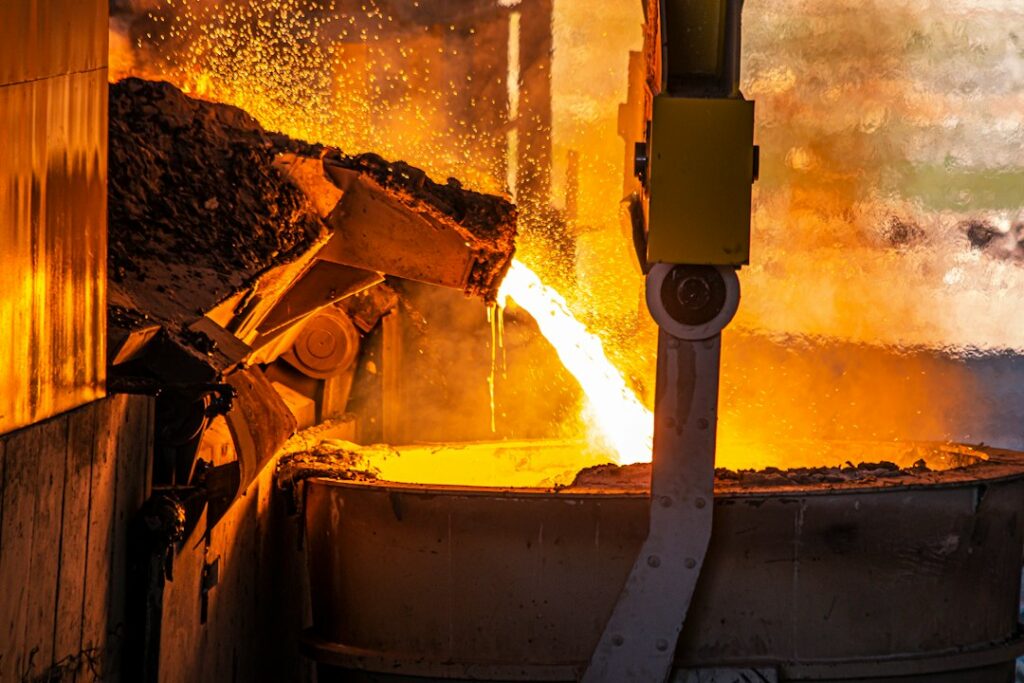
Permanent mold casting pours molten aluminum by gravity or low pressure into a reusable metal mold, with slower, controlled filling. Die casting injects molten aluminum at high speed and pressure into a closed metal die.
This fundamental difference in how the cavity fills explains most of the later differences in production speed, expected porosity and the ability to reproduce complex geometry.
Tooling cost and complexity
Permanent mold tooling is generally less expensive and simpler, suited to medium volumes. Die casting tooling requires higher precision, more elaborate venting and resistance to higher pressures, which raises its initial cost.
For low volumes or validation runs, a permanent mold is usually justified by its lower initial investment, even if the unit cost is higher than large-scale die casting.
Production speed and volume
Die casting allows much faster cycles thanks to high-speed, high-pressure filling, which makes it better suited to high volumes where the tooling cost is spread over many parts.
Permanent mold casting, with slower cycles, is more efficient at medium volumes where the investment in a die casting tool is not justified.
Porosity and mechanical properties
The high filling speed of die casting favors porosity from entrapped air, which can limit its use for parts that must be pressure-tight, heat treated afterwards or welded.
Permanent mold casting, with more controlled filling, generally produces parts with lower porosity and better mechanical properties, and is preferred when the part must be heat treated or needs critical structural strength.
If the part will be heat treated, welded or must be pressure-tight, permanent mold casting is usually the safer option, even if the volume could justify die casting.
Geometric capability and wall thickness
Die casting allows thinner walls and more complex geometry thanks to the filling pressure, making it the preferred option for parts with fine details, inserts or very thin wall sections.
Permanent mold casting has limits with very thin walls or geometry with abrupt section changes, because gravity or low-pressure filling needs more generous flow paths to complete the cavity.
Checklist for choosing the casting process
☐ Project expected annual volume
☐ Compare tooling investment
☐ Estimate unit cost per process
☐ Confirm available budget
☐ Review minimum wall thickness
☐ Identify required fine details
☐ Evaluate inserts or complex geometry
☐ Confirm draft angles
☐ Define pressure-tightness needs
☐ Confirm whether heat treatment is required
☐ Evaluate need for later welding
☐ Set critical mechanical requirements
☐ Compare both processes with real data
☐ Consult the foundry
☐ Validate with a prototype part if possible
☐ Document the decision and its criteria
Common questions.
Is die casting always cheaper per part?
Only above a volume that pays back the higher tooling cost. At low or medium volumes, permanent mold casting can be cheaper in total cost.
Can a die cast part be heat treated?
It is possible, but the porosity typical of the process can cause surface blisters during heat treatment. When heat treatment is a requirement, permanent mold casting or other lower-porosity processes are worth evaluating.
Need help with a similar project?
Share drawings, a 3D model or requirements with our technical team.