
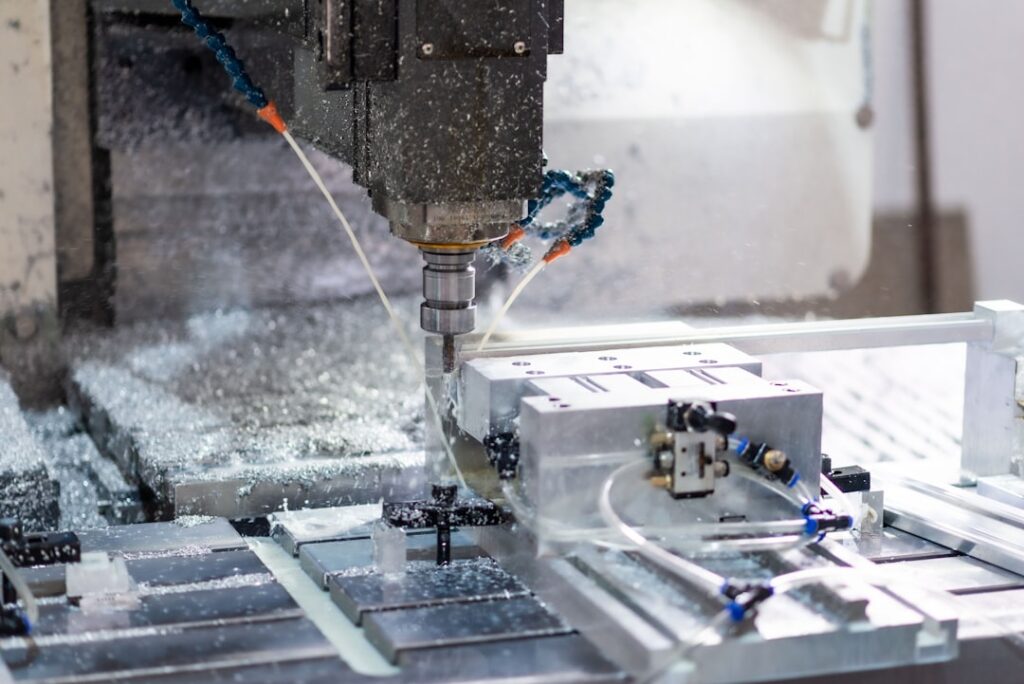
Why the 3D file is not always enough
The model describes the nominal geometry, but it usually does not say which surfaces are functional, which dimensions need special control or how the part will be used. Without that context, the manufacturer has to assume tolerances, material, finish and inspection method.
Those assumptions affect cost and lead time. An unnecessarily tight tolerance can require more setups, finishing operations and inspection. A missing tolerance can produce a part that is geometrically correct but does not do its job.
Define precisely what affects function and allow reasonable tolerances on what is not critical.
Recommended files
For 3D geometry, neutral formats such as STEP usually preserve solids better than triangulated files meant mainly for visualization or 3D printing. The 2D drawing complements the model with tolerances, datums, threads, finishes and manufacturing notes.
Before sending files, confirm that the model matches the current revision, has no duplicate bodies or open surfaces, and that units are defined correctly.
Material and supply condition
Saying aluminum, steel or plastic is not enough. Alloy, temper, hardness, standard or acceptable equivalent can change how the material behaves during machining and in service.
You should also state whether the customer will supply the material, whether a certificate is required, whether equivalents are acceptable and whether later treatments will be applied. These conditions affect sourcing, manufacturing strategy and traceability.
Functional tolerances, not default tolerances
Every tolerance should answer to a function: fit, alignment, sealing, bearing seat, interface or performance requirement. Applying tight tolerances to the whole part raises the difficulty without necessarily adding value.
Use consistent datums and avoid contradictory dimension chains. If orientation or position is critical, the geometric definition should state how the datum will be established and verified.
A tighter tolerance can require additional processes, setups and inspections. It should be justified by function.
Geometry that adds complexity
Deep pockets, internal corners with very small radii, thin walls, high depth-to-diameter ratios, restricted access and multiple orientations may require special tools or additional setups.
Where function allows, larger internal radii, shallower features, standard threads and easy clamping surfaces can improve manufacturability, lead time and cost.
Finishes and treatments
Surface roughness should be specified where it affects sealing, friction, appearance or performance. Terms like fine finish or polished surface are ambiguous without a measurable reference or an approved sample.
If the part will be anodized, nickel plated, ground, heat treated or coated, say so at the quoting stage. The treatment can change dimensions, hardness and the manufacturing sequence.
Quantity, repeatability and inspection
Quantity shapes the strategy. A one-off part may justify a flexible setup; a series may require fixtures, standardized tooling and a repeatable control plan.
Specify whether you need a dimensional report, a material certificate, first article inspection or specific records. The quality scope should be part of the quote, not something that appears only at delivery.
Checklist for requesting a quote
- Clean 3D model at the correct revision
- 2D drawing with functional dimensions
- Material, alloy and condition
- General and specific tolerances
- Threads, inserts and interfaces
- Roughness, treatments and coatings
- Quantity and expected frequency
- Inspection and documentation requirements
- Part application
- Required date
A complete request does not just speed up the quote: it lets you compare proposals on an equivalent scope.
Common questions.
Can I get a quote with only a physical sample?
A sample can be evaluated, but it may require dimensional survey, 3D scanning or reverse engineering. Material, functional tolerances and acceptance criteria will also need to be defined.
Which 3D format should I send?
STEP is a common neutral format for exchanging solids. The final format should still be agreed with the manufacturer according to the software and the complexity of the project.
Need help with a similar project?
Share drawings, a 3D model or requirements with our technical team.